LaboSystem dual-disc grinding and polishing machine supporting 230 / 250 / 300 mm discs — run two preparation stages simultaneously to significantly boost laboratory throughput.
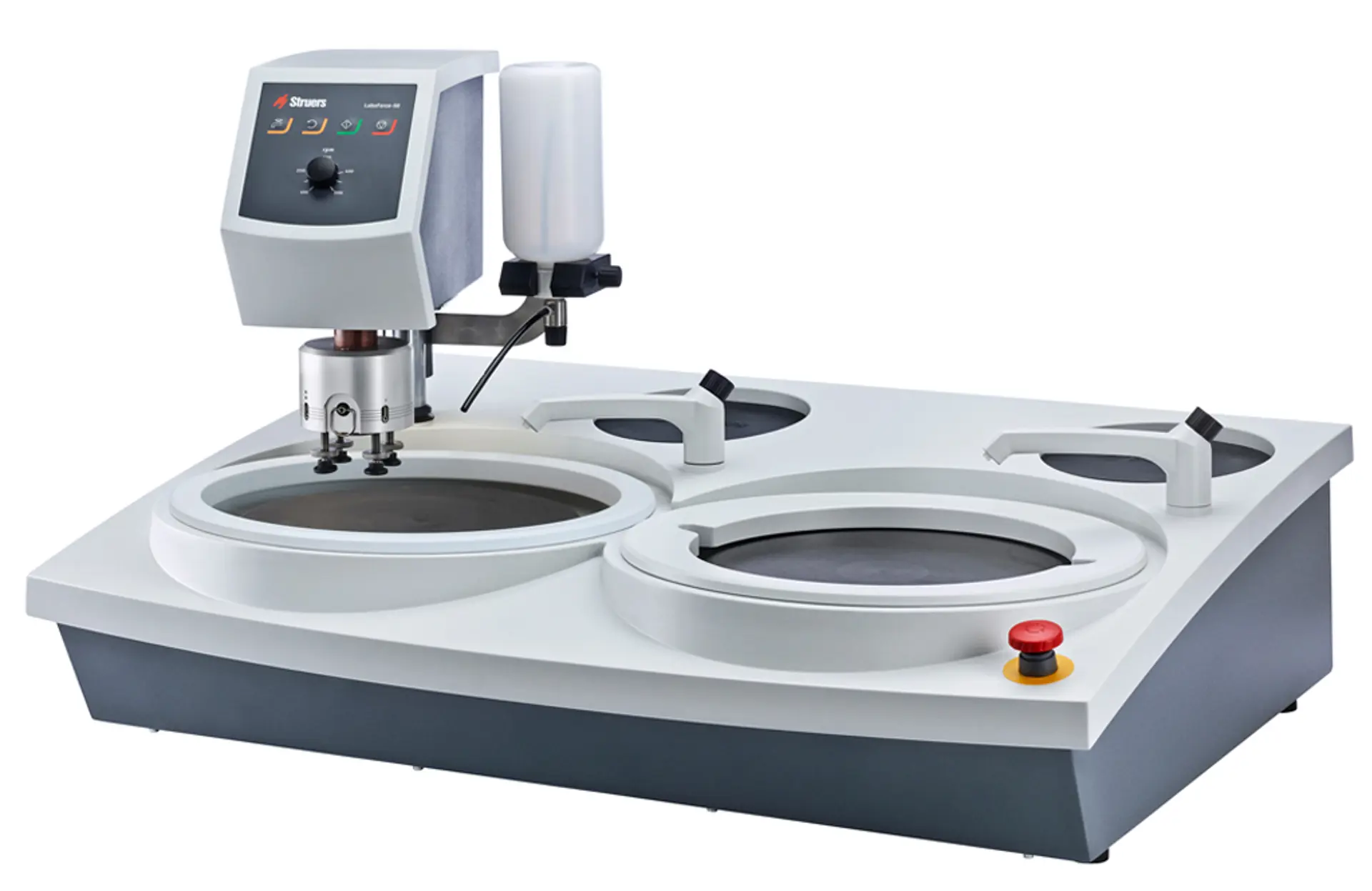
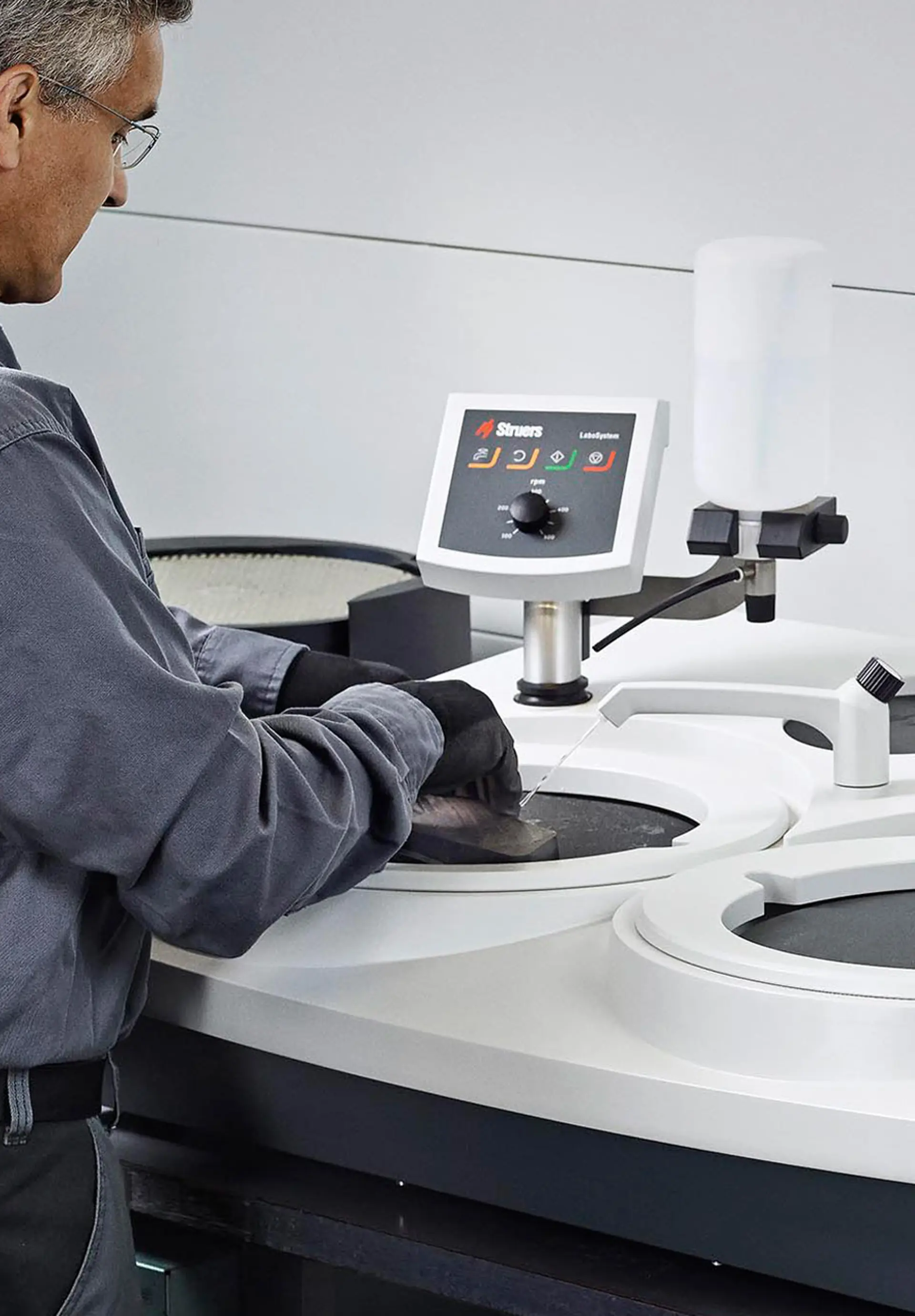
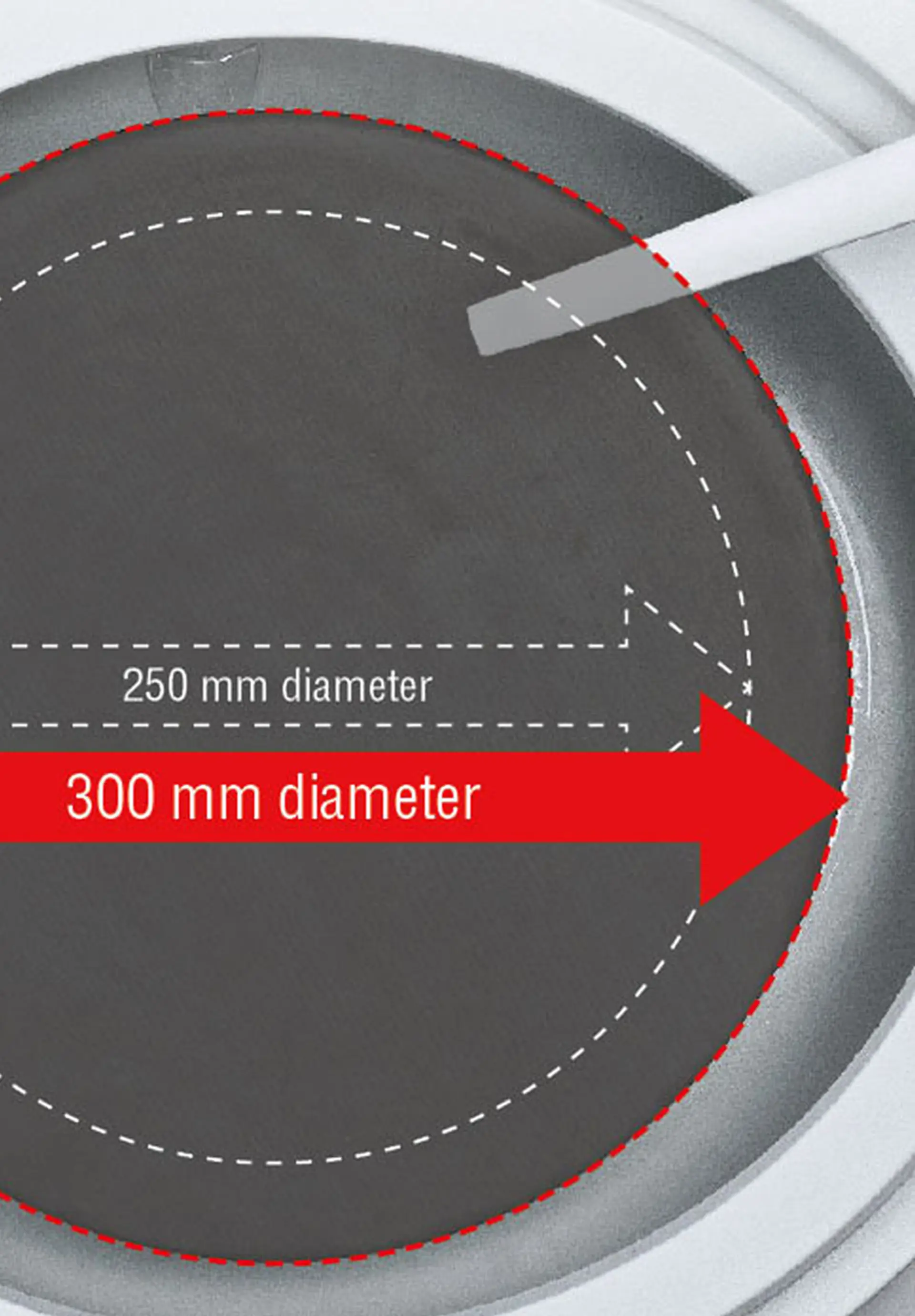
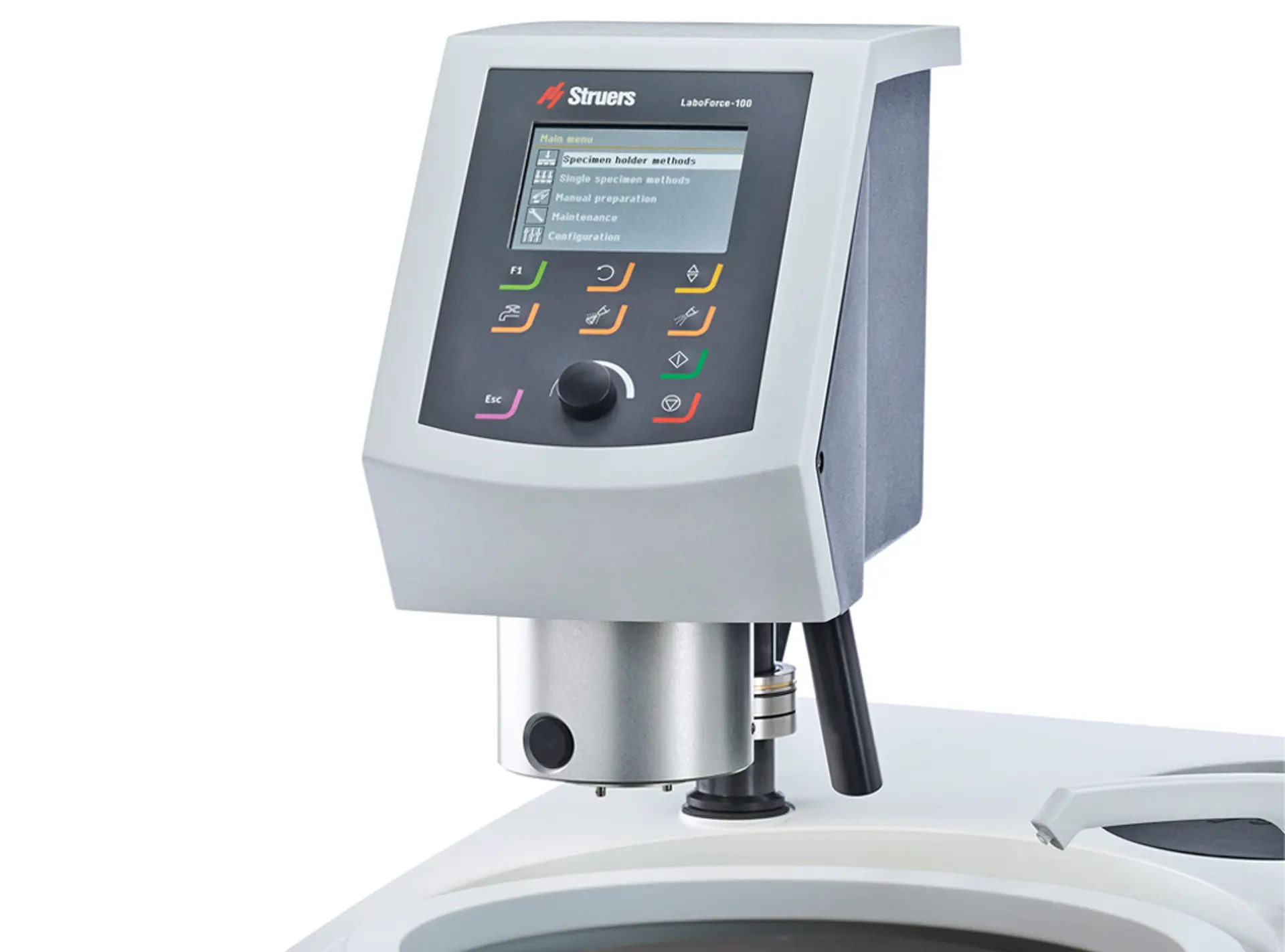
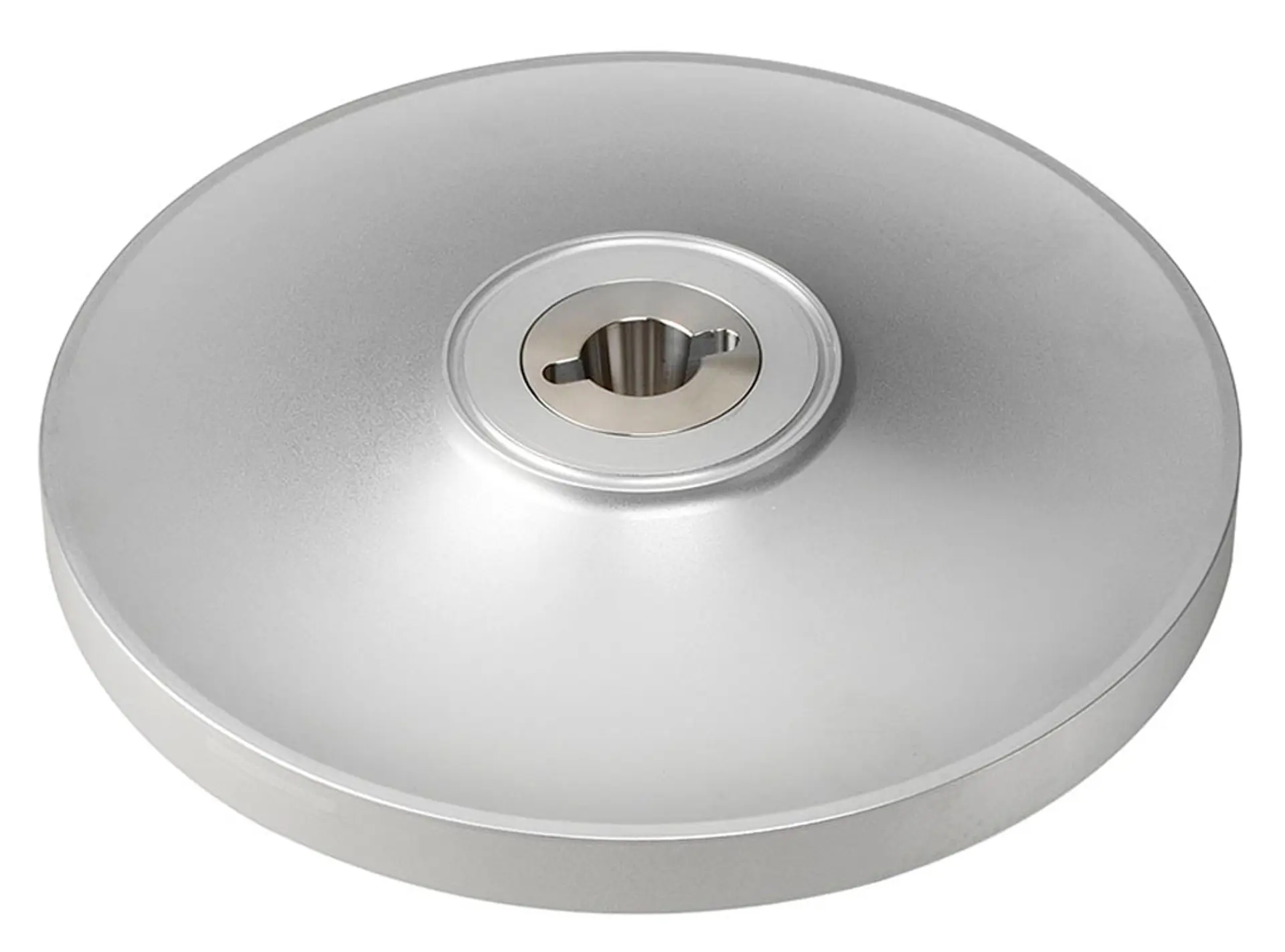
The LaboPol-60 is a dual-disc grinding and polishing machine in the LaboSystem range. Its two discs operate independently, allowing two different preparation steps — for example grinding on one disc and polishing on the other — to run simultaneously for maximum laboratory throughput. It supports 230, 250 and 300 mm disc sizes, and its 750 W motor delivers over 24 Nm of torque at 300 rpm for consistent speed under load. The LaboPol-60 can be used manually with LaboUI, or upgraded to semi-automatic preparation by adding a LaboForce-50, LaboForce-100 or LaboForce-Mi force application head.
| No. of Discs | 2 (independently operable) |
| Disc Sizes | 230 / 250 / 300 mm |
| Speed Range | 50–500 rpm |
| Rotation Direction | Counter-clockwise (fixed) |
| Motor Power | 750 W (continuous, S1) |
| Torque | >24 Nm (@ 300 rpm) |
| Power Supply | 200–240V / 50–60Hz |
| Water Pressure | 1–9.9 bar |
| Machine Weight | 50 kg |
| Dimensions | 950 × 775 × 250 mm |
Contact a Struers application specialist or request an equipment demonstration at your laboratory.